
Kitchen Architecture | 09
The Finish
Beautiful on Day One is Not Enough
More Than Just a Pretty Color
When homeowners select cabinetry, much of the conversation naturally revolves around appearance.
Painted or stained?
Warm or cool?
Light or dark?
Matte or reflective?
Natural wood or a more uniform finish?
Those decisions establish the character of the cabinetry.
But another question becomes increasingly important after the kitchen has been used for several years:
How was the finish actually produced?
A cabinet finish does more than create color and sheen.
It also protects the material beneath it from moisture, oils, food, cleaning products, heat, and the daily wear that comes with one of the most heavily used rooms in the home.
Two cabinets may look equally beautiful when they are first installed.
Years later, they may look very different.
That is why we consider The Finish as part of Kitchen Architecture.
The Finish Is a Performing Surface.
A kitchen is a demanding environment.
Steam escapes from dishwashers.
Water splashes around sinks.
Grease and oils collect around cooking areas.
Wet hands open doors and drawers.
Cabinetry is cleaned repeatedly.
Edges and corners are touched thousands of times.
A finish has to live through all of it.
The color establishes the appearance of the cabinetry.
The finish system helps determine how well that appearance is protected.
A beautiful painted cabinet with an inadequate coating system may look beautiful when it is new.
The real test begins after the kitchen starts being used.
Not All “Finished Cabinetry” Is the Same.
The appearance of a cabinet tells you very little about the finish system protecting it.
Painted and stained cabinetry can both be finished with very different coating systems, preparation methods, and application processes.
During remodeling, we regularly encounter older cabinetry finished with traditional lacquer systems, including nitrocellulose lacquer.
Some of those kitchens looked excellent when they were new.
But over the years, we have also seen these finishes deteriorate in areas exposed repeatedly to moisture, cleaners, oils, and everyday handling.
That does not mean every lacquer finish will fail.
It demonstrates something more important:
The coating system matters.
So does the preparation.
And so does the way the finish is applied.
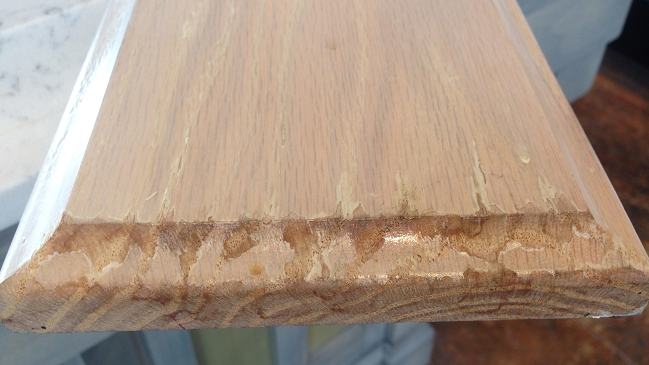
Finish deterioration beneath a sink can begin at edges and joints repeatedly exposed to moisture. This builders grade cabinet, removed during the remodel, was finished with nitrocellulose lacquer.
Why We Specify Conversion Varnish.
For much of our cabinetry, we specify conversion-varnish finishes applied specifically for cabinet and millwork use.
Conversion varnish is a catalyzed coating system selected for its durability and resistance to the kinds of conditions cabinetry encounters every day.
Moisture.
Household chemicals.
Staining.
Repeated cleaning.
General wear.
For us, the objective is not simply to produce a smoother or prettier painted door.
It is to provide a protective finish appropriate for a working kitchen or bath.
But even an excellent coating system is only as good as the process behind it.
Surface preparation matters.
Primers and sealers matter.
Application matters.
Drying and curing matter.
A premium coating cannot compensate for poor preparation.
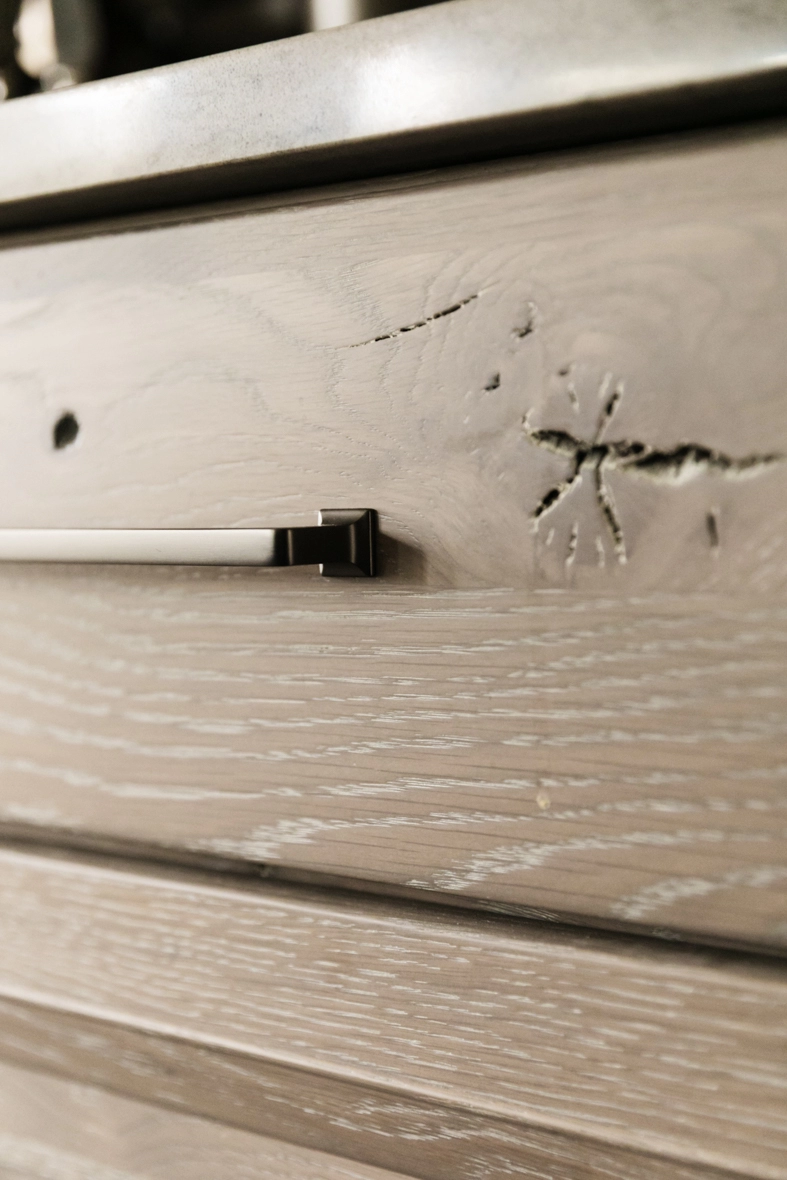
We specify conversion-varnish finishes for their durability and resistance to the moisture, chemicals and wear common in kitchens and baths.
Where the Finish Is Applied Matters.
Our primary cabinet finishes are applied in a controlled cabinet-finishing environment rather than sprayed onto installed cabinetry inside the home.
That distinction provides greater control over variables such as:
- surface preparation
- dust and airborne contaminants
- air movement
- temperature and humidity
- application
- drying
- curing
An active construction site presents very different conditions.
Other trades may be working nearby.
Dust may still be present.
Temperature and humidity can change.
Overspray has to be controlled within the home.
And newly finished surfaces may remain exposed while construction continues around them.
There are situations where field finishing is necessary, particularly with architectural millwork or components that must be completed after installation.
But for cabinetry, we prefer the primary finishing process to happen before the cabinetry reaches the jobsite.
The home should be where finished cabinetry is installed—not where we attempt to recreate a cabinet-finishing facility.
Sometimes the Hardware Tells the Story.
There is a simple detail homeowners can look for when evaluating existing cabinetry:
Open the door and look at the hinges.
We have encountered site-finished cabinetry where the cabinets were sprayed after installation with exposed hinges still in place.
The finish simply continues across the hinge.
In some homes, we have also seen overspray on drawer-slide components.
A painted hinge does not, by itself, determine the quality of the cabinet.
But it does reveal something about the finishing process.
With cabinetry finished as part of a controlled manufacturing process, the cabinetry and hardware are treated as separate components.
Sometimes the details hidden behind the door reveal more than the door itself.
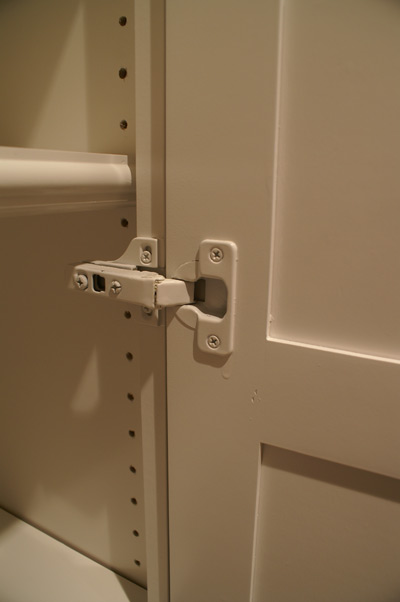
Finish sprayed across the hinge is a visible indication that this cabinetry was finished after the hardware was installed.
What Finish Failure Actually Looks Like.
Finish quality can be difficult to judge when cabinetry is new.
Time makes the differences easier to see.
During remodeling projects, we routinely work in kitchens that have already been used for many years. That gives us the opportunity to see where cabinet finishes have held up—and where they have not.
The first signs of deterioration often appear in predictable places:
Around the sink.
Beside the dishwasher.
At frequently used drawers and trash pull-outs.
Along edges and corners.
Near cooking areas.
These locations receive a combination of moisture, heat, oils, cleaners, and repeated contact.
They are where the finish system is tested most severely.
A sink cabinet does not need to remain beautiful only in a photograph.
It needs to remain beautiful after years of actually being used as a sink cabinet.
Years of use tell the story.
Finish deterioration is not always caused by a dramatic water leak.
Sometimes it begins gradually.
A frequently handled edge.
The top of a drawer front.
A cabinet beside a trash pull-out.
A corner repeatedly touched during everyday use.
These small areas are why we think about finish performance as part of the original cabinet specification.
A finish has to perform where people actually use the kitchen—not only in the center of the door.
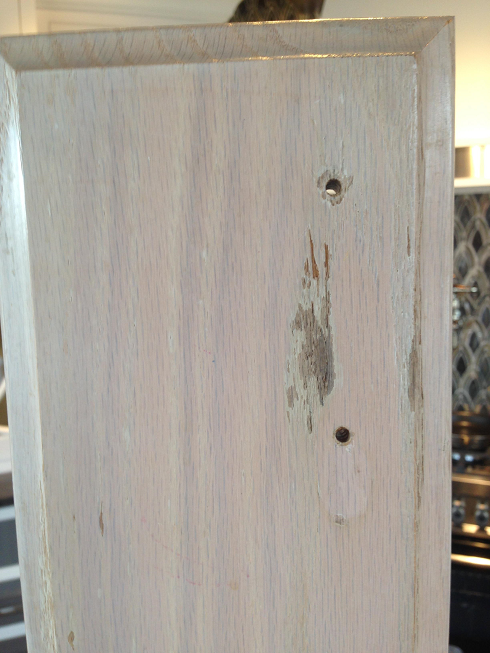
Repeated contact with hands, lotions, cleaners and moisture can reveal the limitations of a less durable finish system over time.
Painted Cabinetry Requires Discipline.
Painted cabinetry is expected to appear controlled and consistent.
That simplicity can be unforgiving.
Surface contamination, inconsistent preparation, poor application or irregularities can become readily visible on a smooth painted surface.
That is one reason preparation is so important.
The final painted surface homeowners see is the last step in a much longer process.
Sanding.
Surface preparation.
Sealing and priming.
Application.
Curing.
Inspection.
The simpler the finished cabinet appears, the more disciplined the process behind it often needs to be.
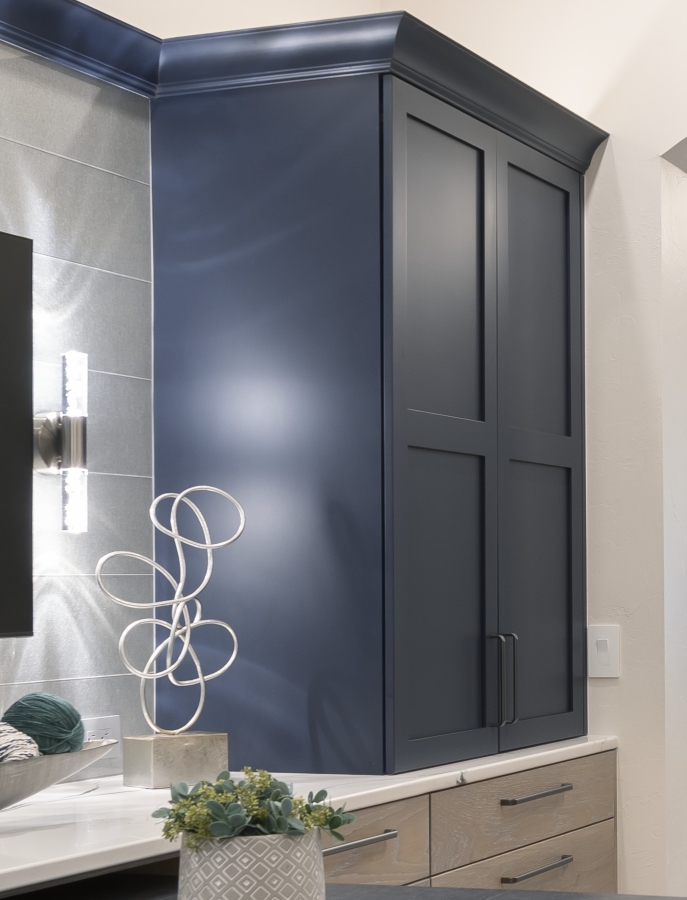
The sheen on this blue cabinet used in this OKC new construction design shows the skill our painter has to apply this with perfection.
Natural Wood Requires a Different Approach.
With stained cabinetry, the finish should enhance the material rather than erase it.
Grain direction.
Natural color variation.
The characteristics of rift-cut or quarter-sawn material.
The personality of reclaimed wood.
Those qualities should remain visible.
Stain color, toner, sheen and protective topcoat all influence how the wood is ultimately perceived.
A successful finish does not make every piece of natural wood identical.
It creates a controlled overall appearance while allowing the material to remain what it is.
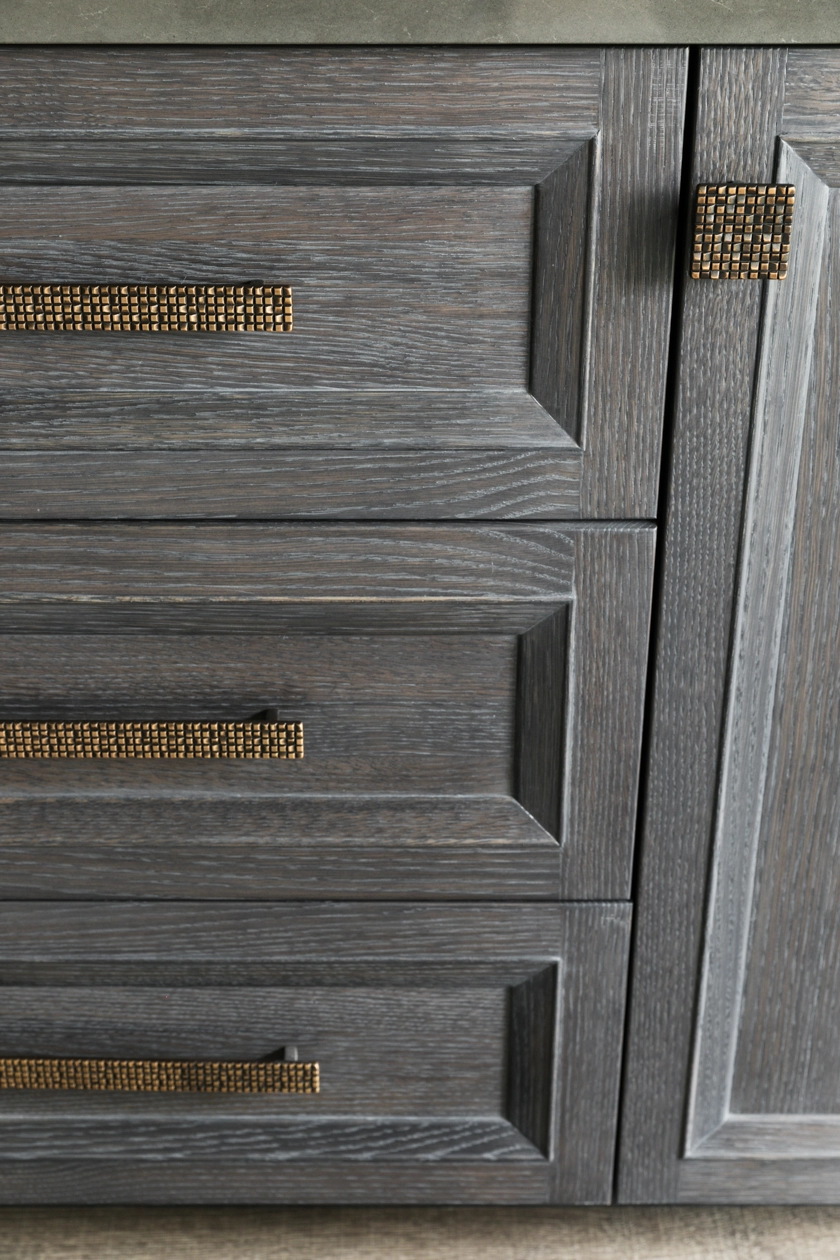
The grain on these oak cabinet drawers is highlighted with a soft glaze.
Sheen Affects the Finish Too.
Color is only part of what the eye sees.
Sheen affects how the surface interacts with light.
A more reflective finish can increase the visibility of color, grain and reflected detail. It can also make fingerprints, surface irregularities and changing reflections more apparent.
A lower sheen produces a quieter effect.
Neither is automatically better.
The appropriate sheen depends on the material and the character of the room.
Lighting also affects the way that finish is perceived, which is why we evaluate cabinet samples within the larger material and lighting palette rather than treating color selection as an isolated decision.
A sample should not simply look attractive on a table.
It has to belong in the room being designed.
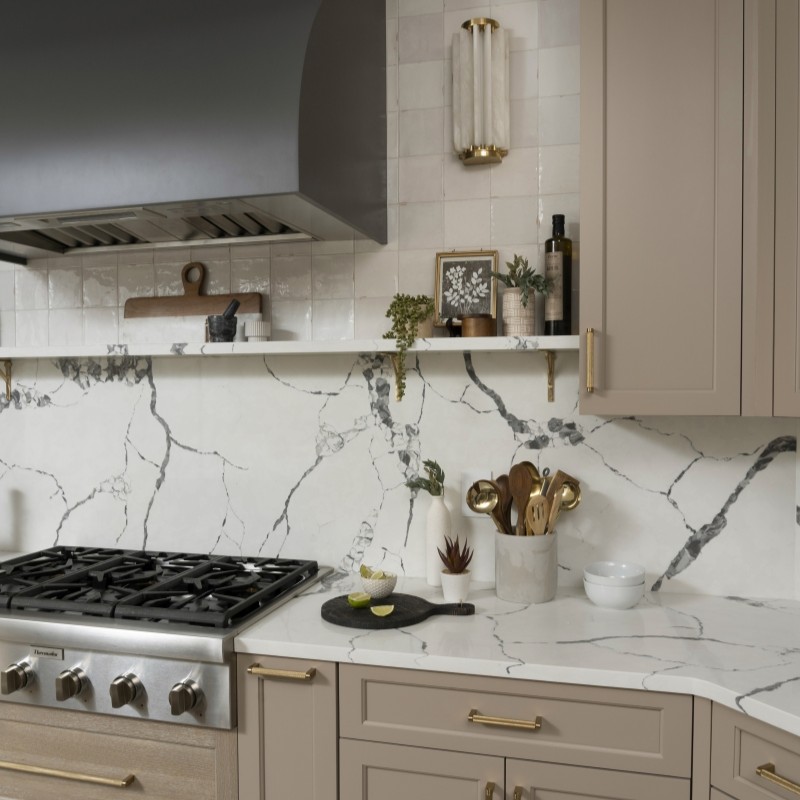
The Sheen on this painted venthood helps to set the tone for this kitchen.
Finish Quality Is Difficult to Judge From a Photograph.
This is one of the challenges homeowners face when comparing cabinetry.
A photograph can show you:
The color.
The door style.
The sheen.
The overall appearance.
It cannot tell you how the surface was prepared.
It cannot tell you what coating system was used.
It cannot tell you where or how that coating was applied.
And it certainly cannot show you what the cabinetry will look like after years of cooking, cleaning, entertaining, children, pets, holidays, wet hands, and everyday life.
Two cabinet proposals can therefore appear remarkably similar on paper while representing very different finished products.
The Finish quality is the difference that may remain hidden until time reveals it.
Ask More Than “What Color Is It?”
When evaluating cabinetry, homeowners should feel comfortable asking questions that go beyond the paint or stain color.
- What type of finish system is being used?
- Where is it applied?
- How are the cabinet components prepared?
- Is the coating catalyzed?
- How is the finish dried and cured?
- How is the system intended to perform around moisture and household chemicals?
- What happens if a finished component eventually needs repair?
Those questions are less exciting than selecting the perfect shade of white.
But they will have far more influence on how that shade of white looks ten years from now.
The Finish Is Part of the Investment.
Custom cabinetry represents a significant investment.
Much of that investment is easy to see.
The wood.
The doors.
The hardware.
The proportions.
The details.
The architecture.
But the finish is the surface that protects it.
It is also the surface the homeowner touches every day.
Investing heavily in cabinetry while giving little consideration to the finish protecting it makes little sense.
Finish quality is not simply an aesthetic upgrade.
It is part of the value of the cabinetry itself.
Beauty Should Last.
A newly completed kitchen should be beautiful.
That is expected.
The more meaningful question is how it will age.
Because a beautiful kitchen should not have an expiration date.
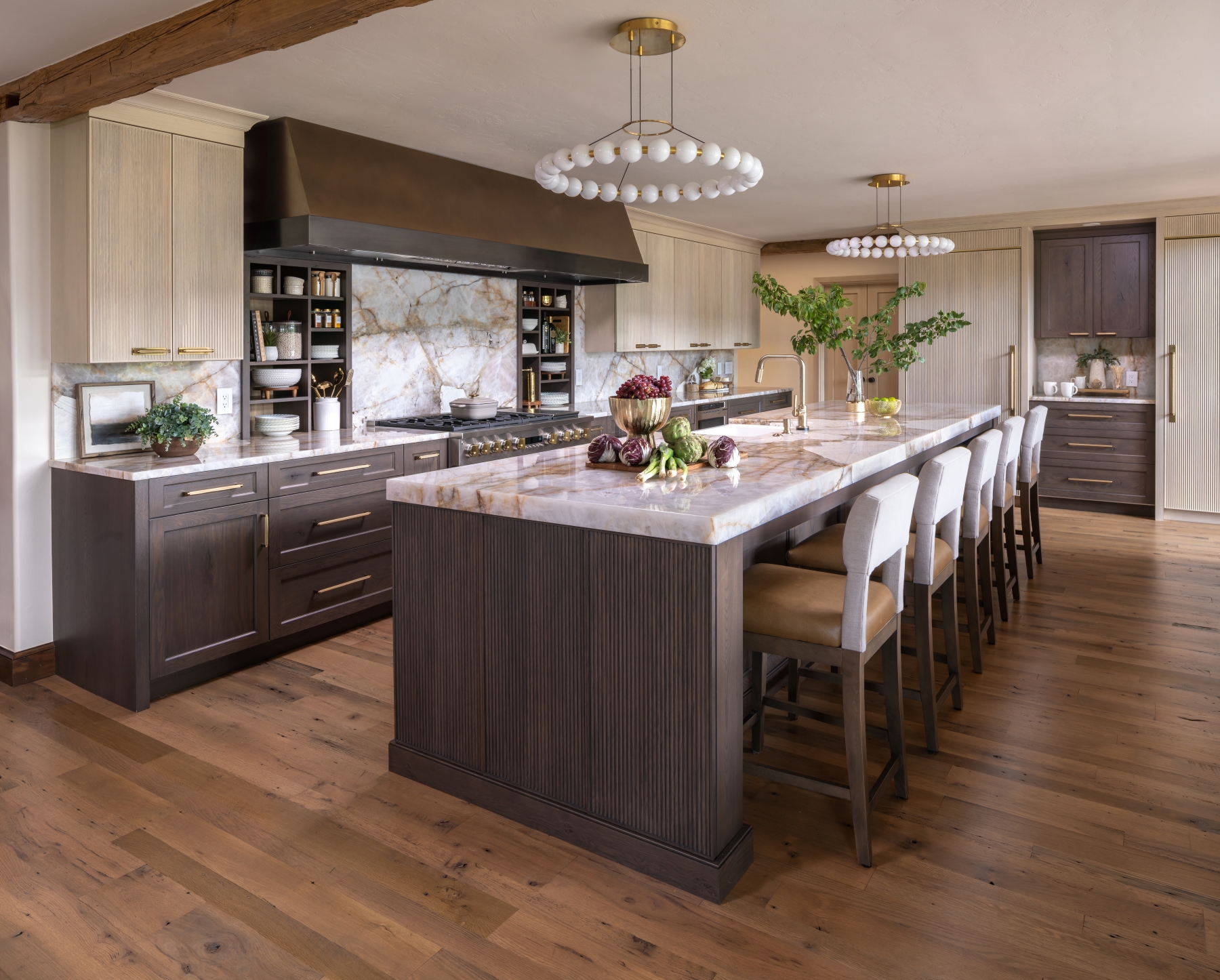
The Finish by Edmond Kitchen & Bath LLC.
At Edmond Kitchen & Bath LLC, we consider cabinet finish quality long before the cabinetry is installed.
We specify coating systems appropriate for the cabinetry and its environment. We favor durable conversion-varnish finishes applied in a controlled cabinet-finishing environment. And we consider preparation, application, color, sheen and long-term exposure to the conditions kitchens encounter every day.
Selecting a beautiful cabinet color is only the beginning.
The finish has another job.
It has to help keep that cabinetry beautiful.
All images are actual Edmond Kitchen & Bath LLC projects.
Explore the 13 Chapters of Kitchen Architecture
Explore full-scale residential design-build insights across all 13 integrated chapters of our masterclass series by Edmond Kitchen & Bath LLC.