
Kitchen Architecture | 11
Materials & Performance
How Materials Look, Perform, and Work Together
Selection Matters More than Just on the Surface
A kitchen brings together materials with very different characteristics.
Natural wood.
Painted cabinetry.
Manufactured cabinet surfaces.
Metal.
Glass.
Natural stone.
Engineered countertops.
Each contributes to the appearance of the room.
But appearance is only part of the decision.
Materials differ in consistency, movement, reflectivity, structural capability, fabrication requirements, maintenance and the way they respond to light.
The question is not simply:
Which material is the most beautiful?
It is:
What should this material contribute to the room?
Cabinetry Is One of the Largest Material Surfaces Seen in a Kitchen.
Cabinetry often occupies more visual area in a kitchen than any other finish.
That makes the material selected for the cabinetry particularly important.
Painted cabinetry, stained natural wood and manufactured surfaces create very different architectural effects.
None is inherently more luxurious.
They simply communicate different things.
Painted Cabinetry Creates Controlled Color.
Paint provides tremendous design flexibility.
It can create a quiet backdrop for dramatic stone or metal.
It can give traditional cabinetry a crisp architectural quality.
It can soften a transitional kitchen or create large, visually consistent cabinet compositions.
Because much of the natural grain is concealed, painted cabinetry generally provides a more uniform appearance than stained wood.
That uniformity can be especially useful when the design depends on repetition, symmetry or a large uninterrupted elevation.
But the apparent simplicity of painted cabinetry places considerable importance on the preparation and coating system beneath the color.
We address that process separately in The Finish.
Here, the material decision is primarily visual:
Do we want the cabinetry to express color—or the natural character of the material beneath it?
Even with paint, we will occasionally design a cabinet with a heavy wood grain, like Oak, then paint the cabinet so the wood grain is seen when light reflects off the surface.
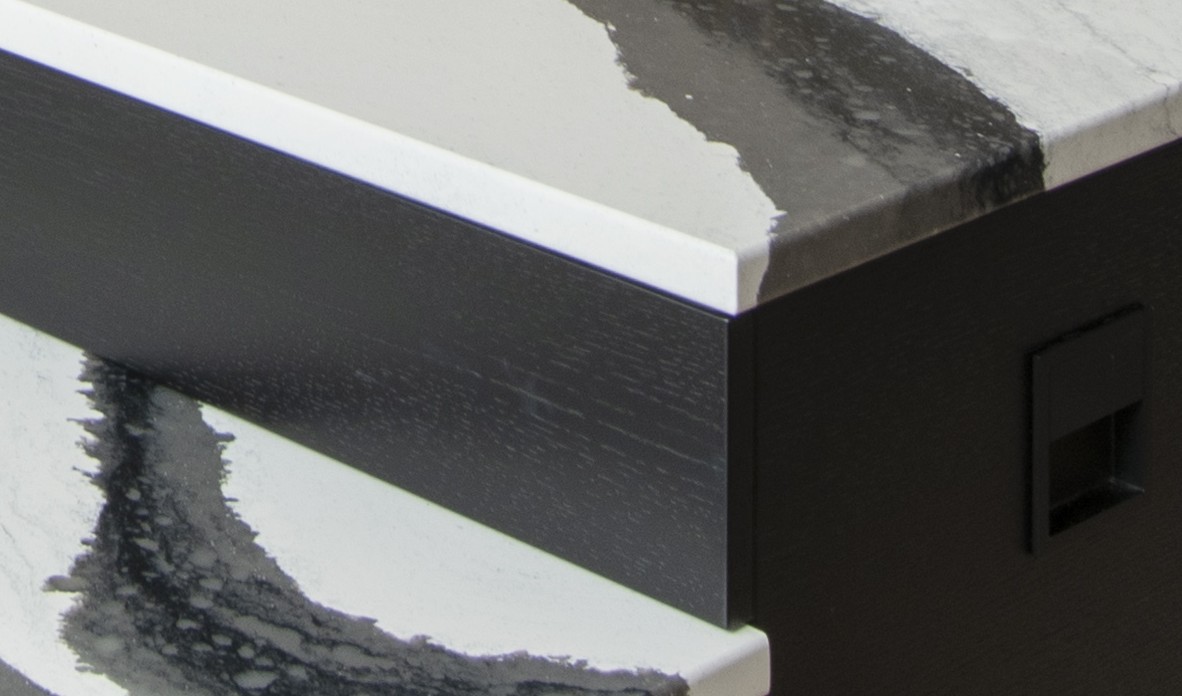
The beauty of painted Oak highlights the grain of the wood in the reflected light.
Natural Wood Brings Variation Into the Design.
Stained cabinetry works differently.
The wood itself remains visible.
Species, cut, grain direction and natural variation all become part of the room.
Rift-cut oak can create a relatively quiet, linear appearance.
Rustic oak can contain considerably more movement.
Walnut introduces its own distinctive color and grain.
Reclaimed material may intentionally show knots, variation and evidence of age.
That variation is not necessarily something to eliminate.
It is one of the reasons to choose natural wood.
The design question becomes how much character the room needs—and how deliberately that character should be controlled across the cabinetry.
Natural wood should look like natural wood.
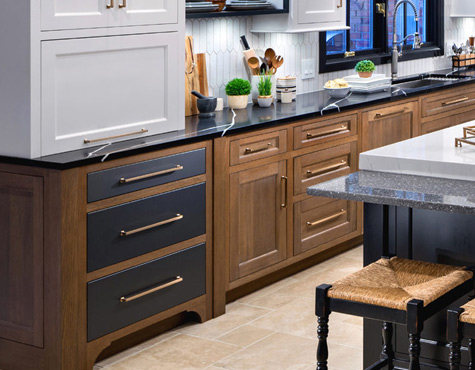
Rustic oak shows off its character, blended with multiple finishes in this Gaillardia Kitchen remodel.
Manufactured Materials Create a Different Kind of Precision.
Many of our modern kitchens incorporate manufactured cabinet surfaces rather than conventional painted or stained wood.
These materials expand the vocabulary considerably.
Ultra-matte surfaces.
High-gloss finishes.
Highly consistent colors.
Textures.
Surfaces with very little visible variation.
Materials that intentionally do not attempt to imitate wood at all.
That consistency can be particularly effective in contemporary cabinetry, where long uninterrupted surfaces and minimal ornamentation place greater emphasis on precision.
Natural wood inherently varies.
A manufactured surface can be selected precisely because it does not.
That does not make it a substitute for wood.
In the right design, its consistency is the reason for using it.
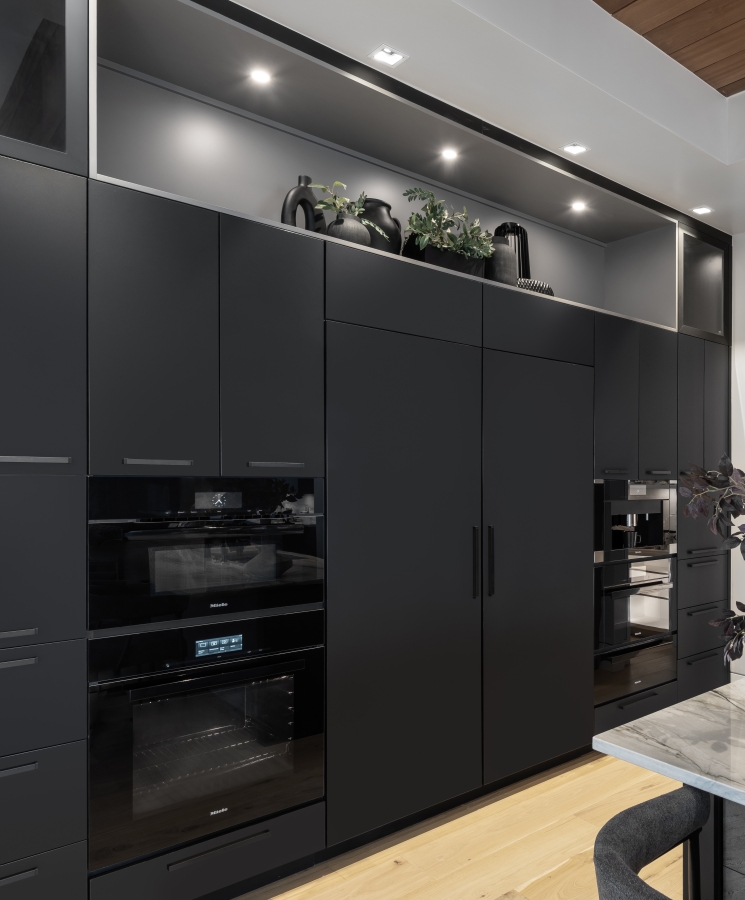
Ultra-matte and soft to the touch, this manmade product was specified for the kitchen in this whole home new build project.
The Best Kitchen May Use More Than One.
The decision does not have to be paint or wood or a manufactured surface.
Some of our strongest kitchens combine them.
Painted cabinetry can be warmed by natural walnut or oak.
A highly uniform modern surface can be interrupted by a richly figured wood element.
A contrasting island can establish hierarchy within an otherwise quiet cabinet composition.
Metal-and-glass cabinetry can lighten a wall that would feel too heavy if constructed entirely from solid material.
The important issue is hierarchy.
One material may lead.
Another may support it.
Another may almost disappear.
Several expensive materials placed together do not automatically create a sophisticated room.
They still have to be composed.
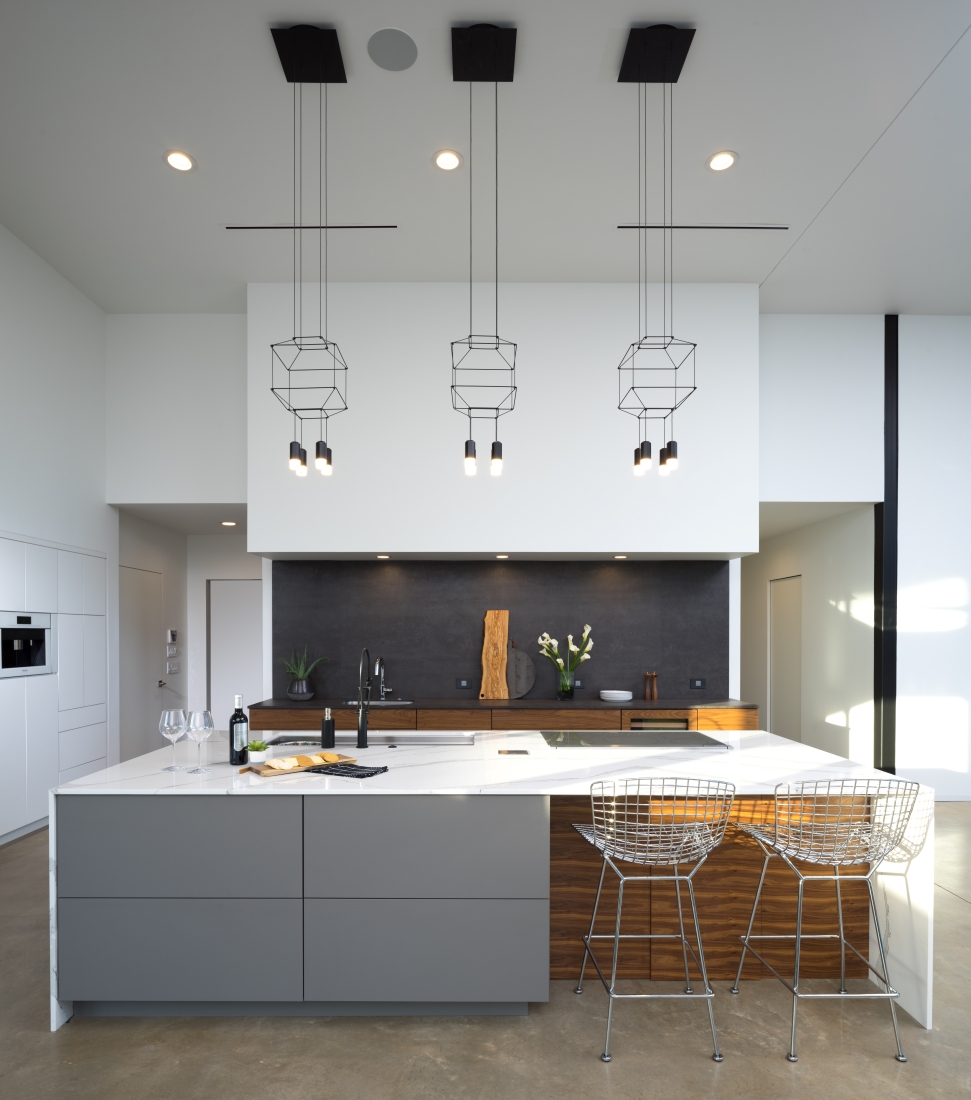
We used natural walnut with manmade panels for this new construction OKC kitchen.
Metal Can Be Structural, Decorative — or Both.
Metal plays a significant role in many of our designs.
Sometimes it is immediately visible.
We use metal-framed cabinet doors with glass to introduce a thinner profile, transparency and contrast with surrounding cabinetry.
We have incorporated metal accent strips into reeded appliance panels, reinforcing the geometry of the cabinetry while adding a subtle reflective detail.
Brass or stainless-steel toe kicks can create a clean break at the floor.
Custom vent hoods may incorporate metal aprons, bands or other accents that give the cooking wall greater visual weight.
In other situations, the metal is doing something far less decorative.
We have incorporated structural steel columns into kitchens where the architecture required them, allowing a material performing an essential structural job to become part of the finished composition.
Metal can therefore perform two very different roles:
It can carry load.
Or it can carry visual weight.
Sometimes it does both.
The decision is not simply whether to use metal.
It is how much should be visible, where it belongs and what role it is being asked to perform.
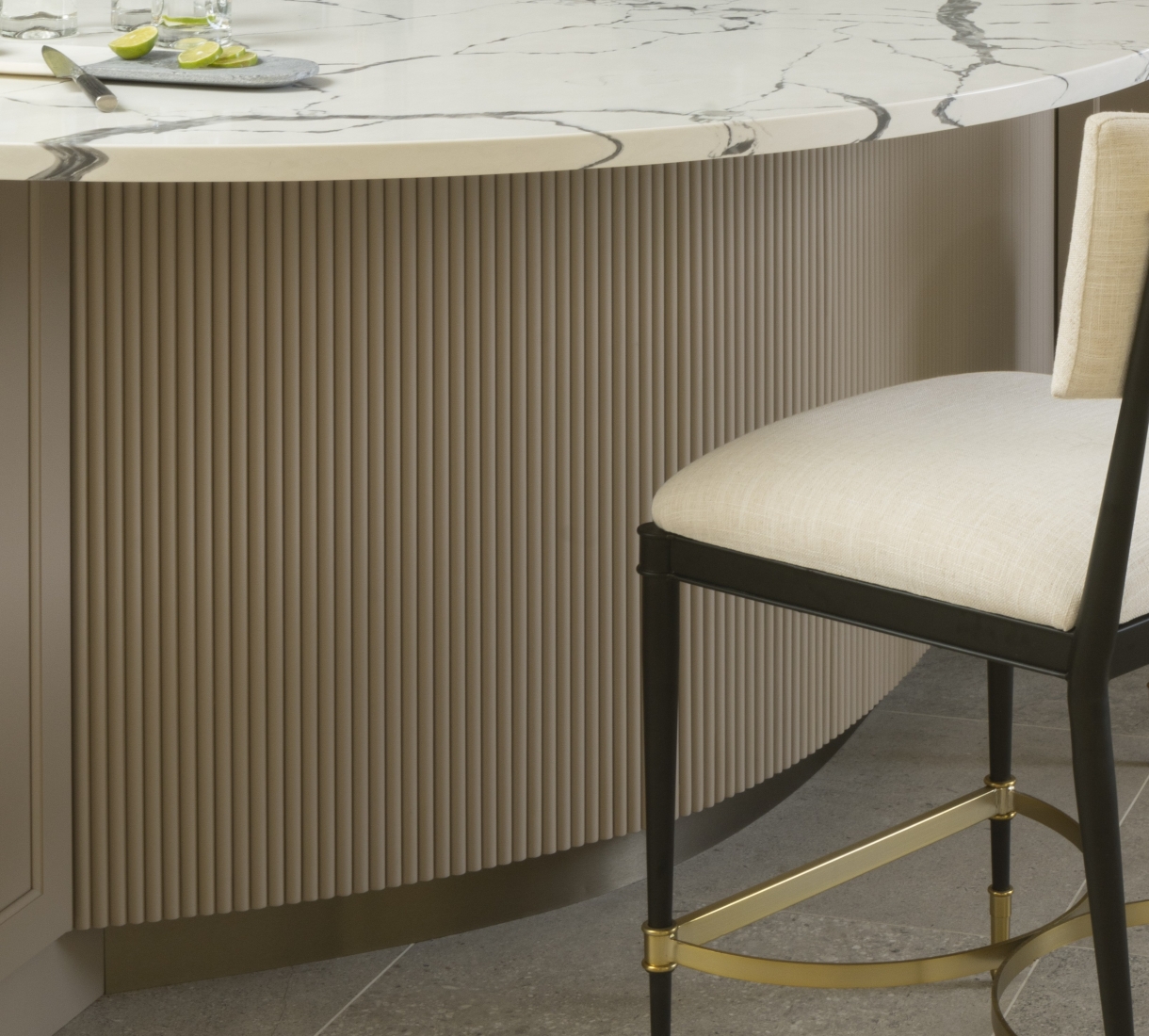
A custom brass toe kick was fabricated for the island in this OKC kitchen remodel.
Glass Changes What Happens Behind the Door.
Glass introduces another material characteristic: transparency.
The moment a cabinet door becomes transparent, the cabinet interior becomes part of the visible design.
Shelves matter.
Lighting matters.
Hardware becomes more noticeable.
What is stored behind the glass matters.
This is one reason our metal-and-glass cabinetry is designed as a complete element rather than simply adding glass to a conventional cabinet door.
The material changes how the cabinet itself has to be considered.
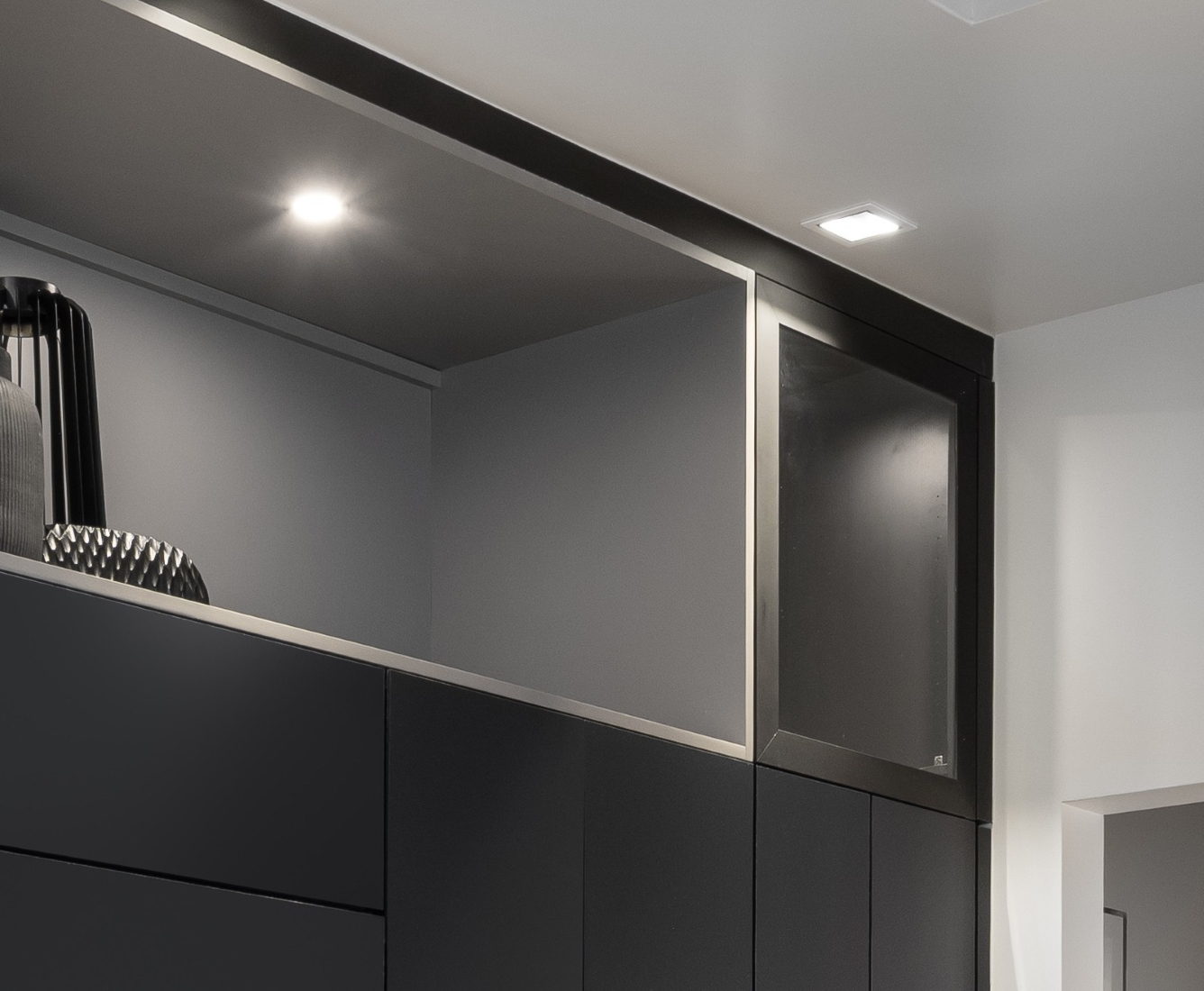
This new home project received these black anodized metal doors with clear glass.
Countertops Have Structural Jobs Too.
Countertops are another area where appearance and performance intersect.
A dramatic slab may become one of the visual focal points of the kitchen.
But the material may also be asked to span a substantial opening or support a deep seating overhang.
At that point, the countertop is no longer simply a finish surface.
Material properties matter.
Span matters.
Thickness matters.
Fabrication matters.
Support matters.
In one of our projects, a countertop span of more than 12 feet required structural reinforcement to be integrated into the island before the finished surface was installed.
The finished island appears visually simple.
The planning beneath it was not.
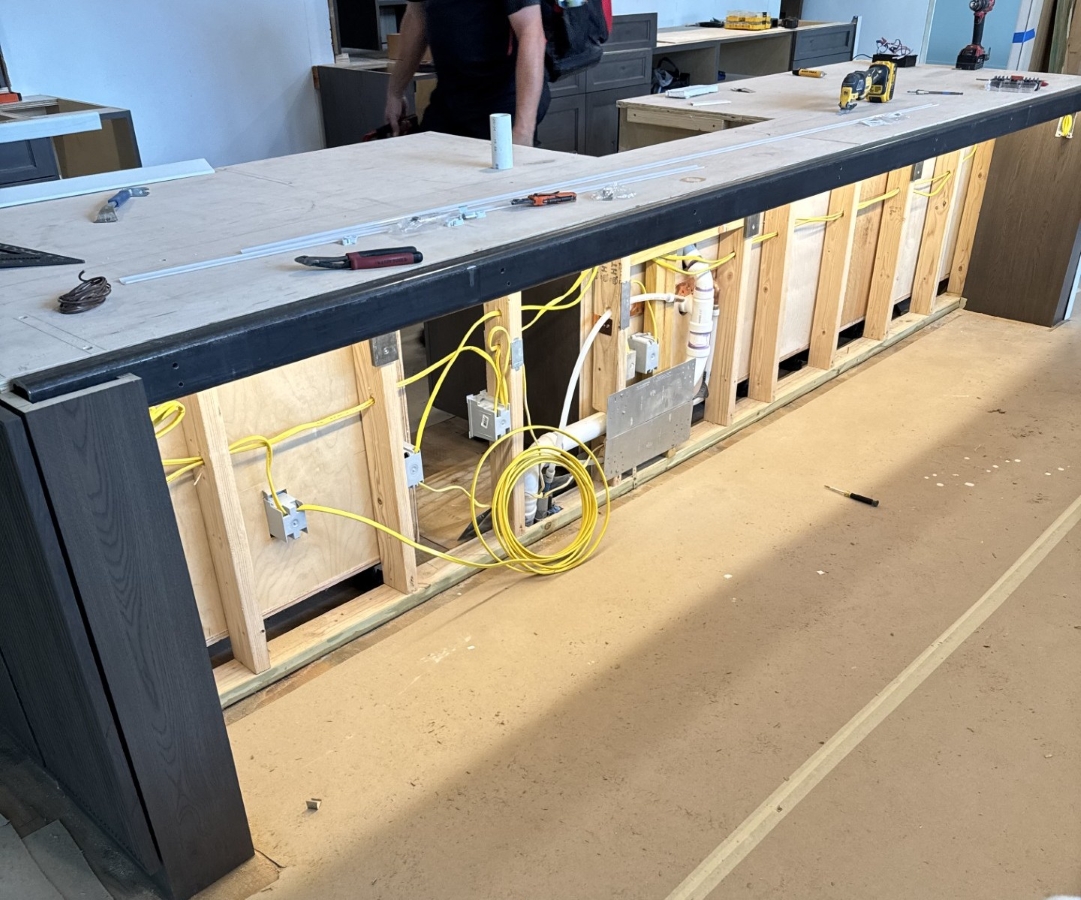
This 12’+ span needed support. We installed this 2″ tall steel box beam, pre-loaded, to provide countertop assistance.
Natural and Engineered Surfaces Solve Different Problems.
The natural-versus-engineered debate is often oversimplified.
We do not approach it as one category being inherently better than the other.
Natural stone can provide extraordinary depth, movement and variation. No two slabs are exactly alike, and that individuality may be precisely what a design needs.
An engineered surface can offer greater visual consistency and characteristics that may make it better suited to another application.
A kitchen can use both.
For example, a dramatic natural stone may become the focal material on an island while a quieter surface elsewhere allows that stone to remain dominant.
The decision should follow the design and the performance requirements—not a hierarchy of which material sounds more luxurious.
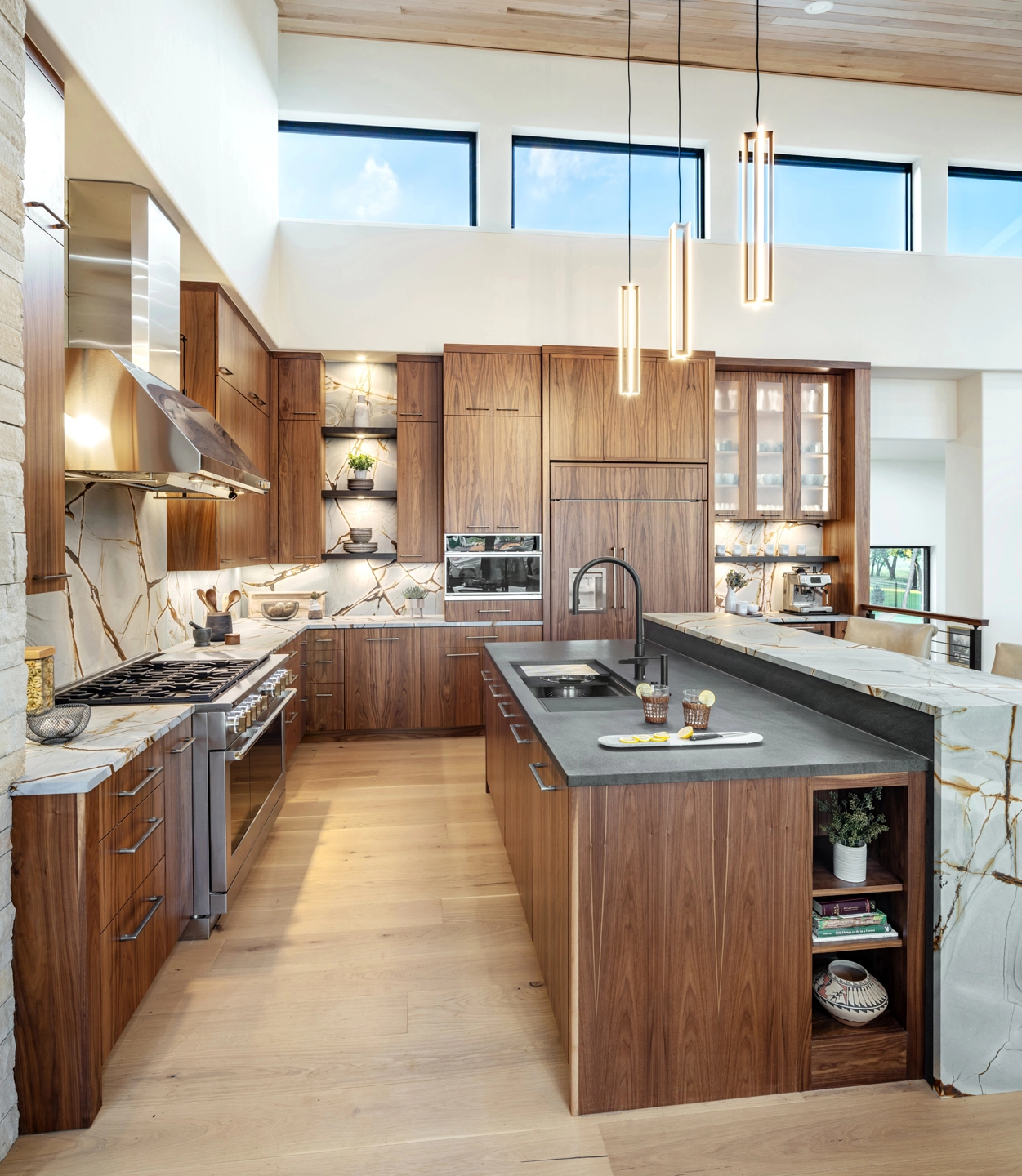
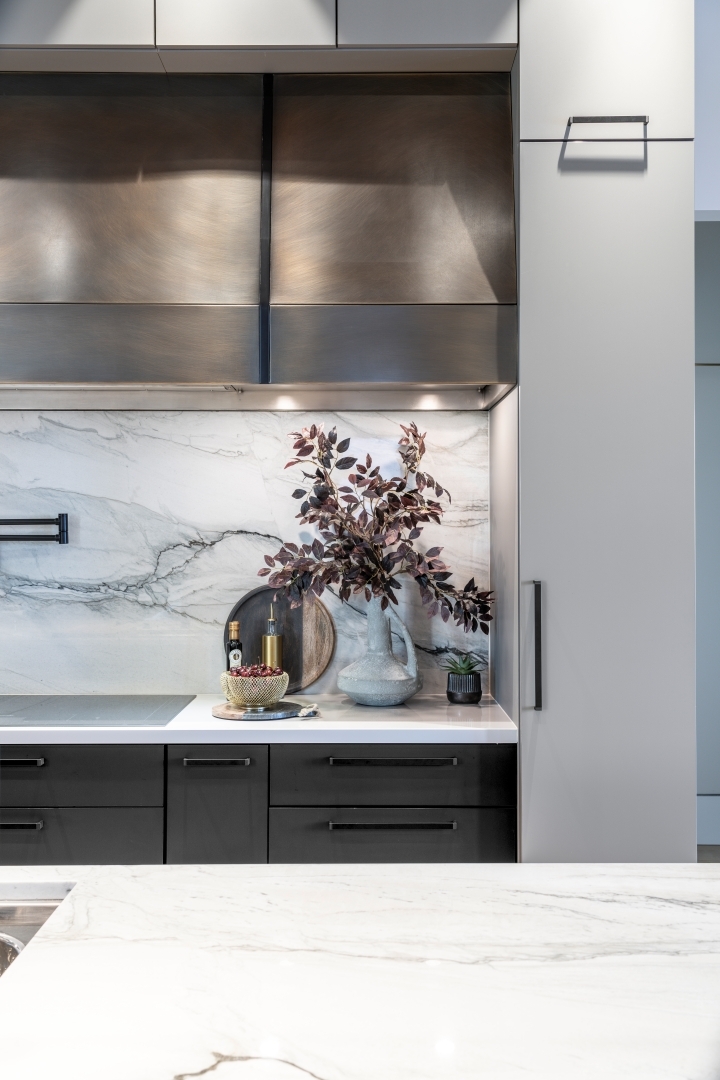
For this new home kitchen design, we used the beautiful Blue Roma in most of the space – but selected a man made quartz for durability at the sink.
Materials Carry Visual Weight.
Materials affect more than color.
Strong grain creates movement.
Highly figured stone commands attention.
Reflective metal catches light.
Glass creates depth.
An ultra-matte surface can visually recede.
Paint can quiet an elevation.
That means material selection is also an exercise in visual balance.
If the island contains extraordinary stone, the surrounding cabinetry may need to become quieter.
If the cabinetry has dramatic natural grain, the backsplash and countertops may need less movement.
If metal is being used as an accent, repetition can strengthen the idea while excessive use can reduce its impact.
The room should not feel like a collection of impressive samples.
It should feel like one composition.
Restraint Is a Material Decision.
A luxury kitchen does not require every surface to announce itself.
In fact, one of the most important design decisions may be deciding not to introduce another material.
Another pattern.
Another metal.
Another dramatic slab.
Another contrasting surface.
The strongest rooms usually contain hierarchy.
Something leads.
Something supports.
Something becomes background.
Good material selection requires understanding not only what to add, but when the composition already has enough.
This softer – less contrast = quartzite stone was selected for this Oklahoma new construction kitchen to compliment the modern cabinetry design.
Materials Should Be Selected for the Entire Design.
A sample is viewed in isolation.
A kitchen is not.
Cabinet material will sit beside stone.
Metal will reflect nearby colors.
Wood will respond to lighting.
Glossy and matte surfaces will behave differently in the same room.
Natural variation may become more or less prominent depending on the scale of the installation.
That is why we evaluate materials as part of the complete design rather than simply selecting attractive samples.
The question is never only:
Do we like this material?
It is:
What happens when we use this material here?
The Right Material Does More Than Look Right.
At Edmond Kitchen & Bath LLC, material selection is part of the architecture of the kitchen.
Painted cabinetry can provide controlled color.
Natural wood can introduce grain and variation.
Manufactured surfaces can create exceptional uniformity.
Metal can provide refinement, contrast or structure.
Glass can add transparency and depth.
Countertop materials can be selected for both visual impact and the physical work they have to perform.
The objective is not to use the greatest number of materials.
Or the most expensive ones.
It is to understand what each material does well—and use it where those qualities contribute the most.
Because the most useful question is not:
“Is this material beautiful?”
It is:
“Is this the right material for what we are asking it to do?”
All images are actual Edmond Kitchen & Bath LLC projects.
Explore the 13 Chapters of Kitchen Architecture
Explore full-scale residential design-build insights across all 13 integrated chapters of our masterclass series by Edmond Kitchen & Bath LLC.